
Beat the Heat: Your Complete Guide to Summer Safety & Preparedness
Summer is one of the most beautiful seasons, but it's also one of the most dangerous. Heat kills more Americans every year than hurricanes, tornadoes, and floods combined. Whether you're hitting the beach, working in the yard, or just running errands, knowing how to stay safe could save your life — or someone else's.
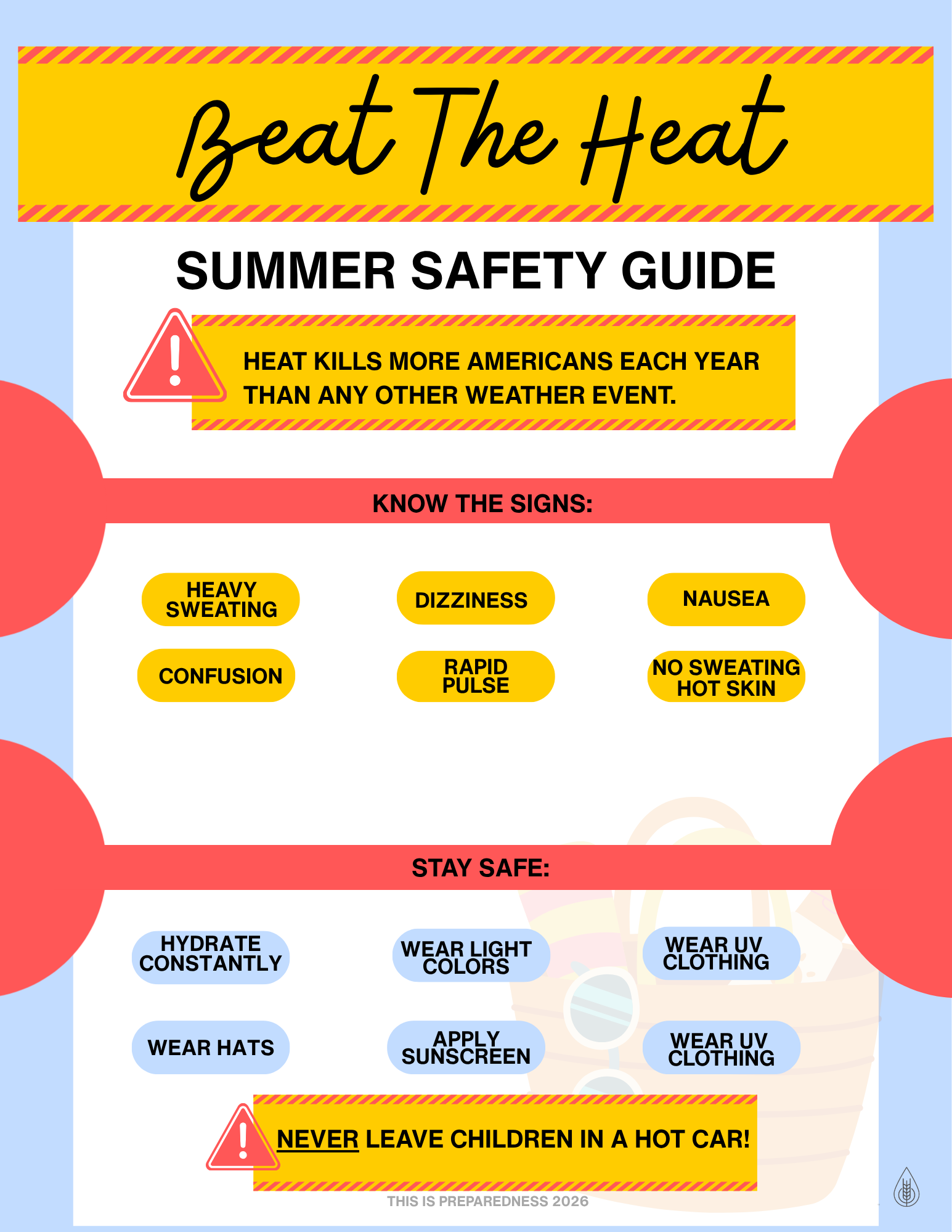
Understanding Heat-Related Illnesses
Heat illness exists on a spectrum. It starts mild and can turn life-threatening within minutes if ignored.
Heat Cramps
The earliest warning sign-Painful muscle spasms, (usually in the legs, arms, or abdomen), caused by loss of salt and fluids through sweat.
What to do: Move to a cool place, stop activity, drink water or a sports drink, and gently stretch the muscle.
Heat Exhaustion
A serious condition that happens when your body loses too much water and salt.
Signs & Symptoms:
Heavy, excessive sweating
Cool, pale, or clammy skin
Fast, weak pulse
Nausea or vomiting
Muscle cramps
Tiredness, weakness
Dizziness or lightheadedness
Headache
Fainting
What to do: Move to a cool location immediately. Loosen clothing. Apply cool, wet cloths to the skin. Sip cool water. Seek medical attention if symptoms worsen or don't improve within an hour.
⚠️ Heat exhaustion can quickly progress to heat stroke if left untreated.
Heat Stroke — A MEDICAL EMERGENCY
Heat stroke occurs when the body's temperature regulation system fails and core body temperature rises to 104°F (40°C) or higher. This is life-threatening and requires immediate 911 call.
Signs & Symptoms:
High body temperature (103°F+ / 39.4°C+)
Hot, red, dry or damp skin
Rapid, strong pulse
No sweating (in classic heat stroke)
Confusion, altered mental state, slurred speech
Loss of consciousness
Seizures
What to do while waiting for 911:
Move the person to a cooler environment
Reduce body temperature with cool cloths, ice packs on neck/armpits/groin
Do NOT give fluids if the person is unconscious or confused
Heat Syncope (Fainting)
Sudden dizziness or fainting from prolonged standing or rising quickly in hot weather. Usually occurs in people not yet acclimatized to heat.
Heat Rash
A skin irritation from excessive sweating. Appears as red clusters of small blisters or pimples, most often on the neck, chest, groin, or elbow creases. Keep the area dry and cool.
Precautions & Prevention
Stay Hydrated…BEFORE You're Thirsty
By the time you feel thirsty, you're already mildly dehydrated. Aim for:
8–10 glasses of water per day minimum in summer
More if you're active or outdoors
Avoid alcohol, sugary sodas, and excess caffeine. These drinks dehydrate you.
Add electrolytes (sodium, potassium, magnesium), if sweating heavily
Dress Smart
Choose lightweight, loose-fitting, light-colored clothing
Opt for moisture-wicking fabrics
Wide-brimmed hats protect your face, neck, and ears
UV-protective sunglasses (look for UV400 or 100% UV protection)
Plan Around the Sun
Avoid outdoor activity between 10am and 4pm — the hottest, most UV-intense hours
Schedule exercise for early morning or evening
Take shade breaks every 20–30 minutes, if outdoors
NEVER Leave People or Pets in a Hot Car
On an 80°F day, a car interior can reach 130°F within minutes. Children and pets left in vehicles are at extreme risk. Even with windows cracked. Even for "just a minute."
Use reminders on your phone or bag when traveling with children
If you see a child or pet in a hot car, call 911 immediately
In Florida and many other states, you are legally protected for breaking a window to rescue a child
Check on Vulnerable People
Elderly adults, young children, and people with chronic illnesses are the most at risk. Check in daily during heat waves. Help them access air conditioning if their home isn't cooled.
What to Keep in Your Beach & Pool Bag
Don't leave home without these summer essentials:
SPF 50+ broad-spectrum sunscreen/Waterproof sunscreen for kids (SPF 50+
Water bottle (insulated)
Electrolyte packets or sports drink
Wide-brimmed hat
UV-protective sunglasses
Aloe vera gel
Waterproof phone case
Small first aid kit
Rash guard or cover-up
Snacks (non-perishable)
Cooling towel
Life jackets for non-swimmers
Everyday Summer Weather Threats (Beyond the Heat)
UV Radiation & Sunburn
UV radiation is present, even on cloudy days. Sunburn is not just painful, it increases long-term risk of skin cancer.
Apply sunscreen 30 minutes before going outside
SPF 30 blocks ~97% of UVB; SPF 50 blocks ~98%. Higher isn't dramatically more protective, but consistent application is.
Don't forget: lips, ears, tops of feet, and the back of the neck
Reapply every 2 hours or immediately after swimming or sweating
Afternoon Thunderstorms
In Florida and the Southeast US, summer afternoons almost always bring fast-moving, dangerous thunderstorms.
Watch the sky — if you see dark clouds building, get inside early
"When thunder roars, go indoors" — seek shelter immediately
Avoid open fields, tall trees, golf courses, pools, and open water during storms
Wait 30 minutes after the last thunderclap before going back outside
Lightning can strike miles from the storm
Rip Currents
Rip currents are responsible for the majority of ocean drownings. They're channels of fast-moving water that pull swimmers away from shore.
If caught: Don't fight it. Swim parallel to shore until out of the current, then swim back
Always swim near a lifeguard
Check beach flags and surf conditions BEFORE entering the water
Red flags = high hazard. Double red = beach closed. Respect them.
Tropical Weather & Hurricanes
If you live in Florida or the Gulf Coast, hurricane season runs June 1 – November 30.
Know your evacuation zone
Build or update a 72hr kit: water (1 gallon/person/day for 3 days), food, medications, chargers, important documents, cash
Fill your gas tank when a storm is more than 3 days out — stations sell out fast
Have a battery-powered or hand-crank weather radio
Wildlife Hazards
In Florida and other Southern states, summer brings encounters with:
Alligators — stay away from freshwater banks, especially at dawn and dusk
Jellyfish — check local beach reports; treat stings with salt water (not fresh water or urine)
Stingrays — do the "stingray shuffle" (slide feet along the seafloor when entering shallow water)
Fire ants — watch where you step at the beach and in parks
Mosquitoes & Bug Safety
Summer is peak mosquito season, and Florida mosquitoes can carry viruses like West Nile, Zika, and Eastern Equine Encephalitis (EEE).
Use EPA-registered insect repellent (DEET, Picaridin, or Oil of Lemon Eucalyptus)
Wear long sleeves and pants during peak mosquito hours (dawn and dusk)
Eliminate standing water around your home
When to Call 911
Call 911 immediately if someone:
Is unresponsive or unconscious
Has a body temperature over 104°F
Is confused, disoriented, or seizing
Has stopped sweating despite extreme heat
Shows signs of heat stroke
Stay safe, stay hydrated, and enjoy the sunshine responsibly. Share this post with someone who needs it — heat illness is preventable when we know what to look for. Always consult a medical professional for personal health advice. In an emergency, call 911.
