
The Highest-Impact Skills You Can Learn: First Aid and CPR
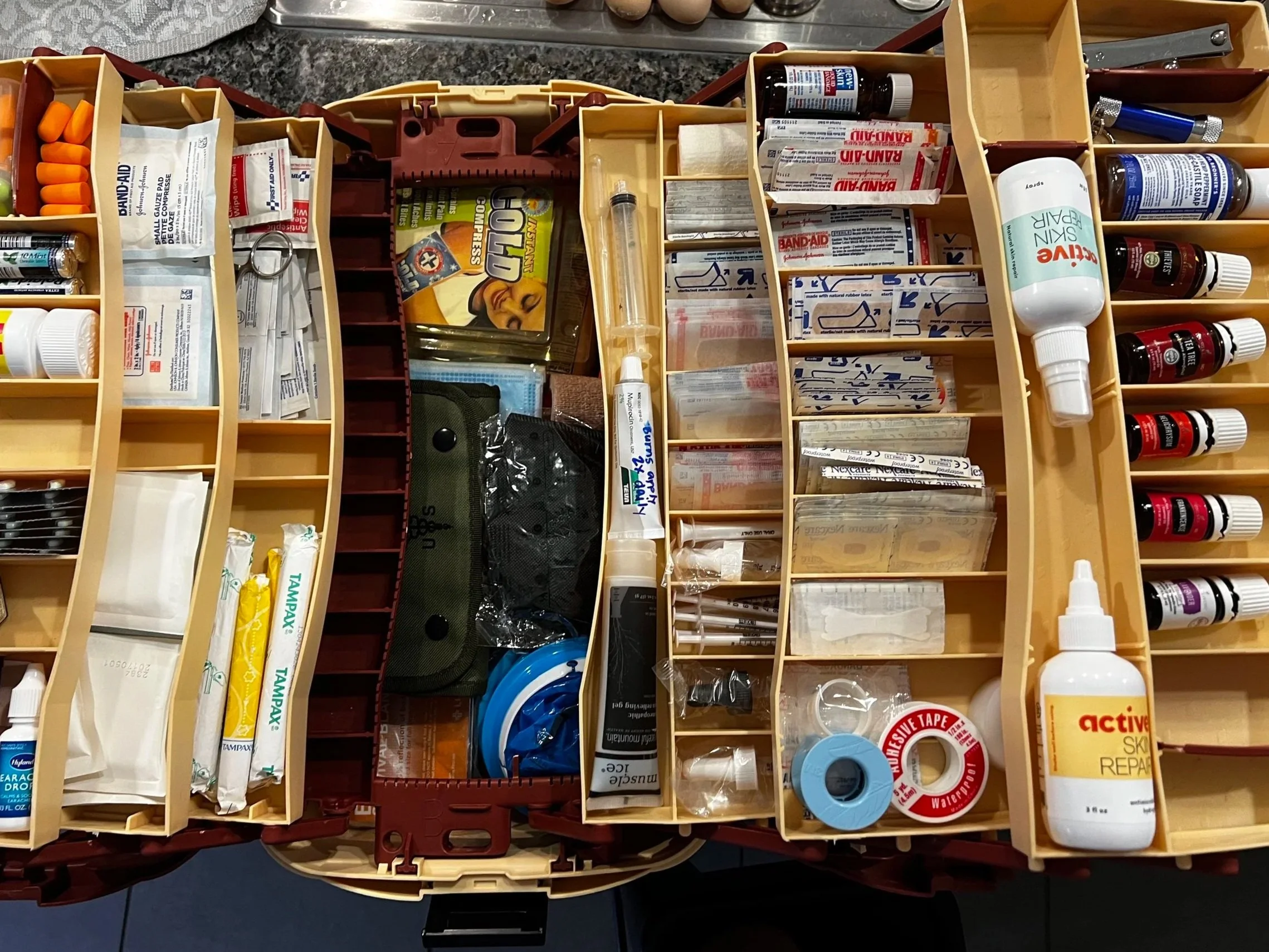
If you could do one thing this month to genuinely increase your family's safety — not in a theoretical, someday kind of way, but right now, in real life — it would be this: get certified in First Aid and CPR.
Not because emergencies are inevitable and not because you need to live in fear. But because the window between when something goes wrong and when help arrives is often 3 to 5 minutes — and what happens in that window matters more than almost anything else.
Cardiac arrest. Severe bleeding. Choking. These are not rare events that happen to other people. They happen at home, at the dinner table, in the backyard. They happen to children and grandparents and healthy adults without warning. In that critical window, the person who can help is almost always not a paramedic. It is someone like you.
WHY FIRST AID AND CPR MATTERS
Every minute that passes after cardiac arrest without intervention reduces survival rates by 7 to 10 percent. Bystander CPR can double or triple the chances of survival, yet fewer than half of Americans know how to perform it correctly.
Basic first aid knowledge: how to stop severe bleeding, how to treat a burn, how to help someone who is choking those cover the majority of emergency situations an average person will ever encounter. We are not training for wilderness survival. We are getting the training and skills that should be everyday knowledge in every home.
HOW TO GET CERTIFIED
Getting certified is far easier than most people think. The American Red Cross offers both in-person and online courses for First Aid, CPR, and AED use. Many courses can be completed in a single day, and prices range from free to around $30 to $80 depending on location and course level. (Visit redcross.org to find a class near you.) Take your spouse or partner and make it a double date!
The American Heart Association is another trusted source, particularly for hands-only CPR training and more advanced certifications. (Visit heart.org for course listings.)
Many local fire stations offer free community CPR training — call your nearest station and ask. This is an underused resource that most people do not know exists.
It is important to re-certify annually. CPR guidelines are updated periodically by the American Heart Association, and the physical skills — especially chest compressions and rescue breathing — fade much faster than you would expect without regular practice.
BUILDING YOUR FIRST AID KIT
Knowledge matters. So do supplies. A well-stocked first aid kit at home and in your car means you can act immediately without scrambling. Check your kit every six months. Supplies expire, and at least in my home items get used without being replaced.
I have created a comprehensive list of what your home first aid kit should include: (CLICK HERE for FREE printable)
RESOURCES TO LEARN MORE
American Red Cross — redcross.org/take-a-class
American Heart Association — heart.org/cpr
FEMA Emergency Preparedness — ready.gov
Poison Control Center — 1-800-222-1222 (available 24/7)
Stop the Bleed Campaign — stopthebleed.org (free bleeding control training)
American College of Emergency Physicians First Aid guide — available at acep.org
This is your reminder that preparedness is not about fear at all. It is about love — for your family, your neighbors, your community. A few hours of training and a well-stocked kit could be the difference between a tragedy and a story you tell about the day everything was okay because someone knew what to do.
That someone can be you.
