
What Red Flag Warnings Really Mean (And Why You Should Be Paying Attention)
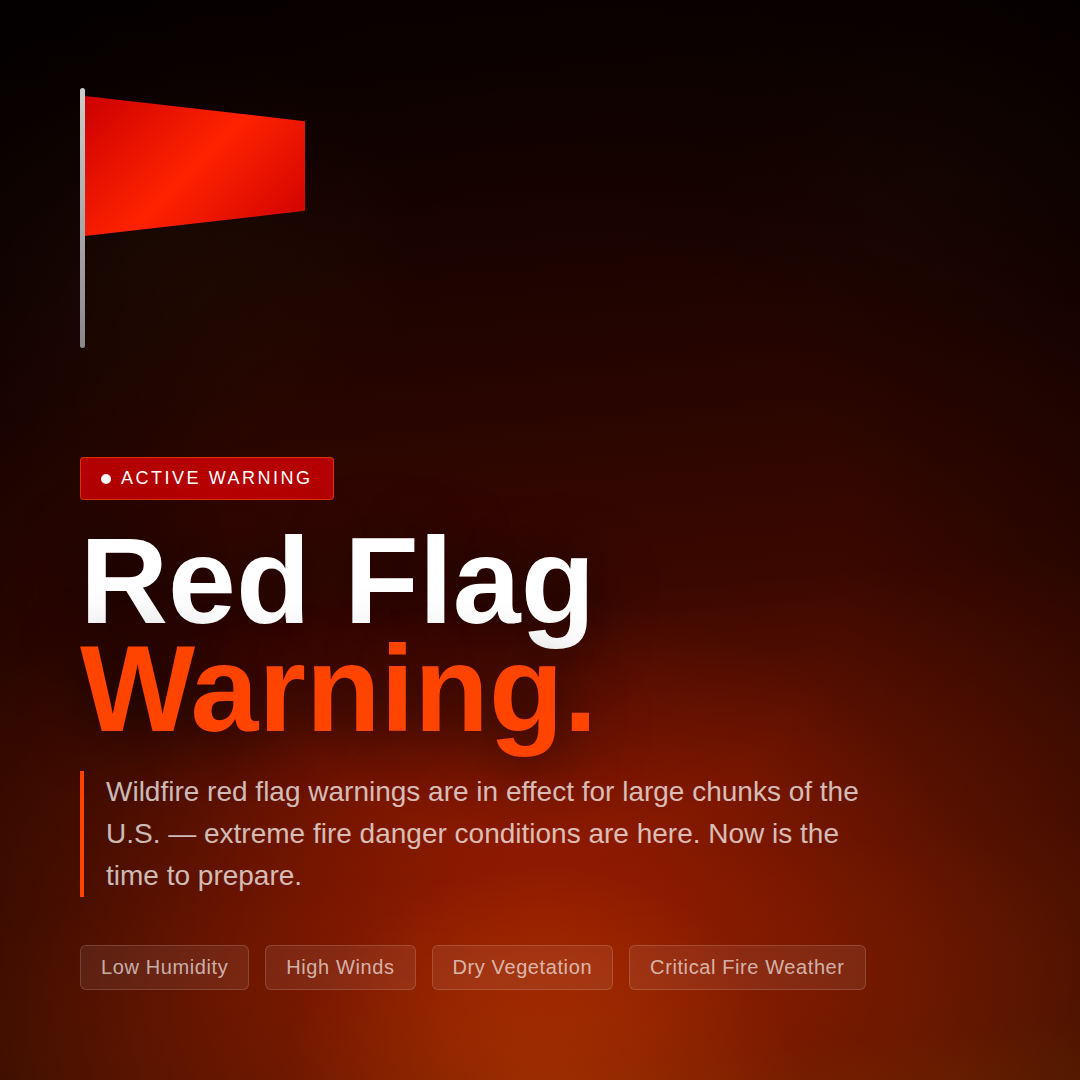
This isn’t just another weather alert.
Right now, Red Flag Warnings are stretching across a massive portion of the central United States—from Texas all the way up to the northern border states. Millions of acres across states like Florida, New Mexico, Colorado, Kansas, Nebraska, and the Dakotas are under conditions where one spark could turn into a fast-moving wildfire.
This is widespread. It’s active. And it matters.
So… What Is a Red Flag Warning?
A Red Flag Warning means fire conditions are critical.
Not “maybe someday.”
Not “keep an eye on it.”
It means the environment is primed for fires to start easily and spread quickly.
Here’s what’s happening behind the scenes:
Low humidity is drying everything out
Strong winds can push flames rapidly across land
Dry vegetation becomes instant fuel
Put it all together, and you have a situation where even a small, everyday spark can escalate fast.
This Is Bigger Than Just Fire
When people think about wildfires, they think about forests but the impact goes far beyond that.
These conditions threaten:
Homes and communities
Farms and livestock
Food production and supply chains
Infrastructure and local economies
We’re already seeing the ripple effects—damage to land, stress on agriculture, and rising costs that eventually hit all of us.
This is how weather turns into real-world consequences.
What You Should Be Doing Right Now
A Red Flag Warning is not passive information—it’s a signal toreduce risk immediately.
Here’s what that looks like in real life:
Avoid anything that could spark a fire
Skip outdoor burning
Be cautious with tools or equipment
Never toss cigarettes outside
Be aware of your surroundings
Clear dry debris near your home
Pay attention to local updates
Think twice before doing anything that involves heat or friction outdoors
Have a basic plan
Know how you would leave if needed
Keep essential items accessible
Stay connected to alerts in your area
Prepared, Not Panicked
This isn’t about fear—it’s about awareness.
Red Flag Warnings are one of those signals that many people overlook… until it’s too late.
But the reality is simple: The conditions for disaster don’t start when the fire does—they start long before.
And the people who are prepared? They’re the ones who saw the signs early and took small steps that made a big difference.
Start where you are today. Small steps now create real security later and peace of mind.
SHARE this info with family, friends and neighbors. Be sure to FOLLOW along for practical, no-overwhelm ways to get prepared.
