
The Original Preppers: What America's Founders Knew About Self-Reliance
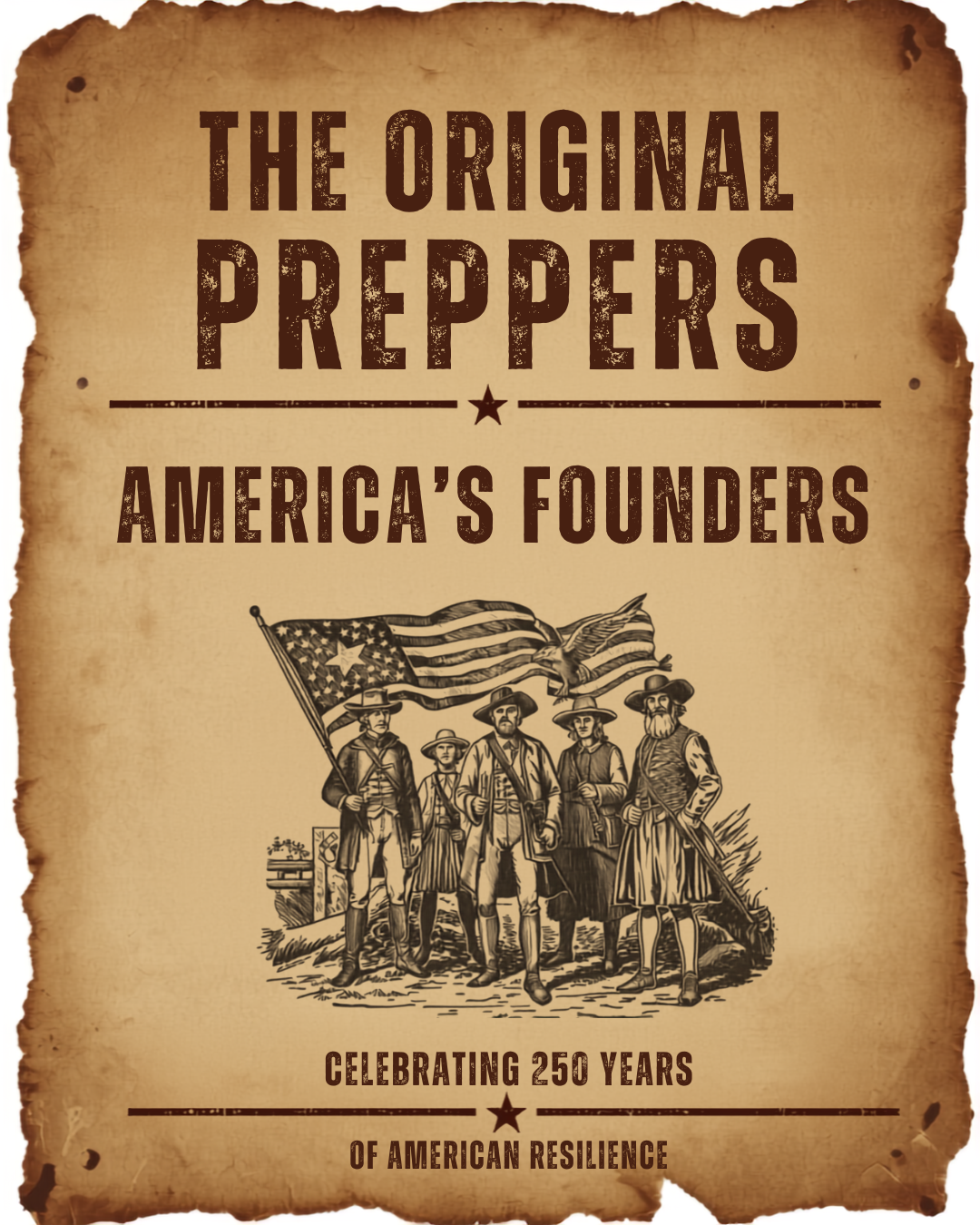
As America approaches its 250th birthday this summer, I have been thinking a lot about where the spirit of preparedness comes from and how deeply it is woven into the history of this country.
The founders of this nation were, by necessity and by conviction, some of the most prepared people who ever lived. Not because they loved emergency kits. But because the world they lived in demanded self-reliance as a baseline condition of survival.
WHAT SELF-RELIANCE LOOKED LIKE IN EARLY AMERICA
Storing food in Colonial America was a daily necessity rather than a choice. Because there were no grocery stores or refrigerators, households had to preserve, cure, and can their seasonal harvests and butchered meats to ensure they had enough sustenance to survive the harsh winters. Root cellars were stocked each fall with enough preserved food to survive a winter without resupply. Salt, smoke, and fermentation kept meat and vegetables viable for months. Water was collected, stored, and conserved. Every household maintained the tools and skills needed to produce what they could not buy which, in many cases, was most things.
In doing some research, I learned that when Thomas Jefferson wrote about the virtues of an “agrarian, self-sufficient citizenry”, he was not writing abstractly. He was describing what he believed made free people free — the practical ability to sustain themselves without dependence on systems or institutions that could fail or be controlled by others.
Benjamin Franklin's ‘Poor Richard's Almanack’ was, among other things, a preparedness manual. "By failing to prepare, you are preparing to fail" is not a quote about business strategy. It is a statement about how free people take responsibility for their own lives.
The past 20+ years I have been learning and practicing self-reliance in as many areas as I can. It is something that gives me peace-knowing I can provide for my family in the lean times or seasons of natural disasters. It is freeing. It is something I am very proud of.
COMMUNITY PREPAREDNESS AS AN AMERICAN VALUE
The founding era also understood something that modern preparedness culture sometimes misses: individual preparation and community resilience are not competing values — they reinforce each other.
Have you ever seen videos of the Amish and their barn raisings? It is a work of beauty in so many ways but I especially love the many helping hands coming together to help and then the speed and quality in which the barns are built. They come TOGETHER. They build their community TOGETHER.
Barn raisings. Food drives. Food swaps. The tradition of neighbors helping neighbors through hard seasons. Ahhhh….these were not charity cases. They were systems of mutual preparedness — everyone contributing to a collective capacity that benefited everyone. To me, that’s what the true American spirit is all about. We NEED to get back to our roots, the fundamentals.
A prepared neighborhood is exponentially more resilient than a collection of prepared households with no connection to each other. We need to get to know our neighbors. Find out what they need or how we can help them be a little better prepared.
WHAT THIS MEANS FOR US 250 YEARS LATER
The infrastructure of modern life is remarkable. It is also more fragile than we tend to acknowledge. Power grids, supply chains, water systems, communication networks — all of it can be disrupted by weather, by natural disaster, by human error, or by any number of events that history tells us are not as rare as we hope.
The founding generation did not see self-reliance as pessimism. They saw it as FREEDOM. The ability to sustain your family without depending entirely on systems outside your control is not a doomsday mentality. It is an expression of the same spirit that has always made this country resilient.
Two hundred and fifty years later, the tools look different but the principle is the same. Store what you need, build your skills, know your neighbors and prepare with the same quiet confidence that built this country.
Happy almost-250th!
You Did the Work. Now You Are Ready.
Ten weeks ago, you made a decision. Maybe it was a wildfire alert that nudged you. Maybe it was a news story that hit a little too close to home. Maybe it was simply the quiet, persistent feeling that you should be doing more to protect the people you love.
Whatever brought you here — you showed up. And week after week, you kept showing up. You built something real. Not a vague intention, not a half-finished list on your phone. An actual kit. An actual binder. An actual plan.
That is worth celebrating! And it is worth understanding exactly what you have accomplished.
What We Built Together
Here is a look at every week of the challenge and what it added to your family's preparedness:
Week 1 — Starting Your Kit + Your Binder (the foundation) — choosing your contianer, understanding the goal, and beginning your Grab & Go Binder with the documents that matter most.
Week 2 — Water Storage + Purification (the non-negotiable). How much to store, how to store it safely, and how to purify water when your supply runs out.
Week 3 — Food + Nutrition. Shelf-stable meals your family will actually eat, how to rotate your supply, and the "eat what you store" principle that makes prep sustainable.
Week 4 — Shelter + Warmth. Staying safe when your home is compromised or you need to leave — emergency blankets, clothing layers, and shelter essentials.
Week 5 — First Aid + Medical Supplies. A comprehensive first aid kit, the three emergencies most likely to matter, and why CPR certification is the highest-impact skill you can learn.
Week 6 — Lighting, Communication + Organization. Reliable lighting, backup communication when cell networks fail, and getting your kit organized so it actually works under pressure.
Week 7 — Tools, Gear + Sanitation. The practical tools that keep you self-reliant, and the sanitation supplies that protect your family's health when plumbing stops working.
Week 8 — Holistic Preparedness. Personal comfort items, identification documents, and written emergency protocols — because true preparedness takes care of the whole person.
Week 9 — Special Needs + Community. Making sure your plan accounts for every member of your household — and how a prepared neighborhood is safer for everyone.
Week 10 — Review, Refresh + Maintain. How to keep your kit current, when to rotate supplies, and how to make preparedness a sustainable habit rather than a one-time project.
Preparedness Does Not Stop Here
Completing this challenge is a genuine achievement — but it is also a beginning. A 72-hour kit is exactly what it sounds like: enough to sustain your family for 72 hours. Many emergency situations last longer. And preparedness, like any skill, needs to be maintained and deepened over time.
Think of your kit not as a finished project but as a living system. It needs to be checked, updated, and refreshed — just like your smoke detector batteries or your car's oil.
Here are the most important things to do to keep your preparedness strong:
Review your kit every six months. Check expiration dates on food, water, and medications. Replace anything that has been used or expired. A kit that has not been checked is a kit you cannot fully trust.
Update your binder when life changes. New medications, new insurance, a new address, a new family member or pet — your binder should always reflect your family's current reality.
Re-certify in CPR annually. The physical skill fades faster than you expect. A refresher course takes just a few hours and could make all the difference.
Expand toward a two-week supply. Once your 72-hour kit is solid, start building toward 14 days of food, water, and supplies. Extended emergencies are more common than most people think.
Connect with your community. A prepared neighborhood is exponentially safer than a prepared household alone. Share what you have learned. Encourage the people around you to build their own kits.
If you are still working through the weeks, it;s ok-keep going. There is no deadline on this. Every week you complete adds something real to your family's safety.
And if you have finished all ten weeks — take a breath! Look at what you built. Then SHARE this info with someone who needs to start.
Thank you for being here! For taking this seriously. For choosing to be the person in your family who made sure everyone was ready. That is one of the most loving things you can do.
Wildfire Mitigation & Preparedness: How to Protect Your Home and Family
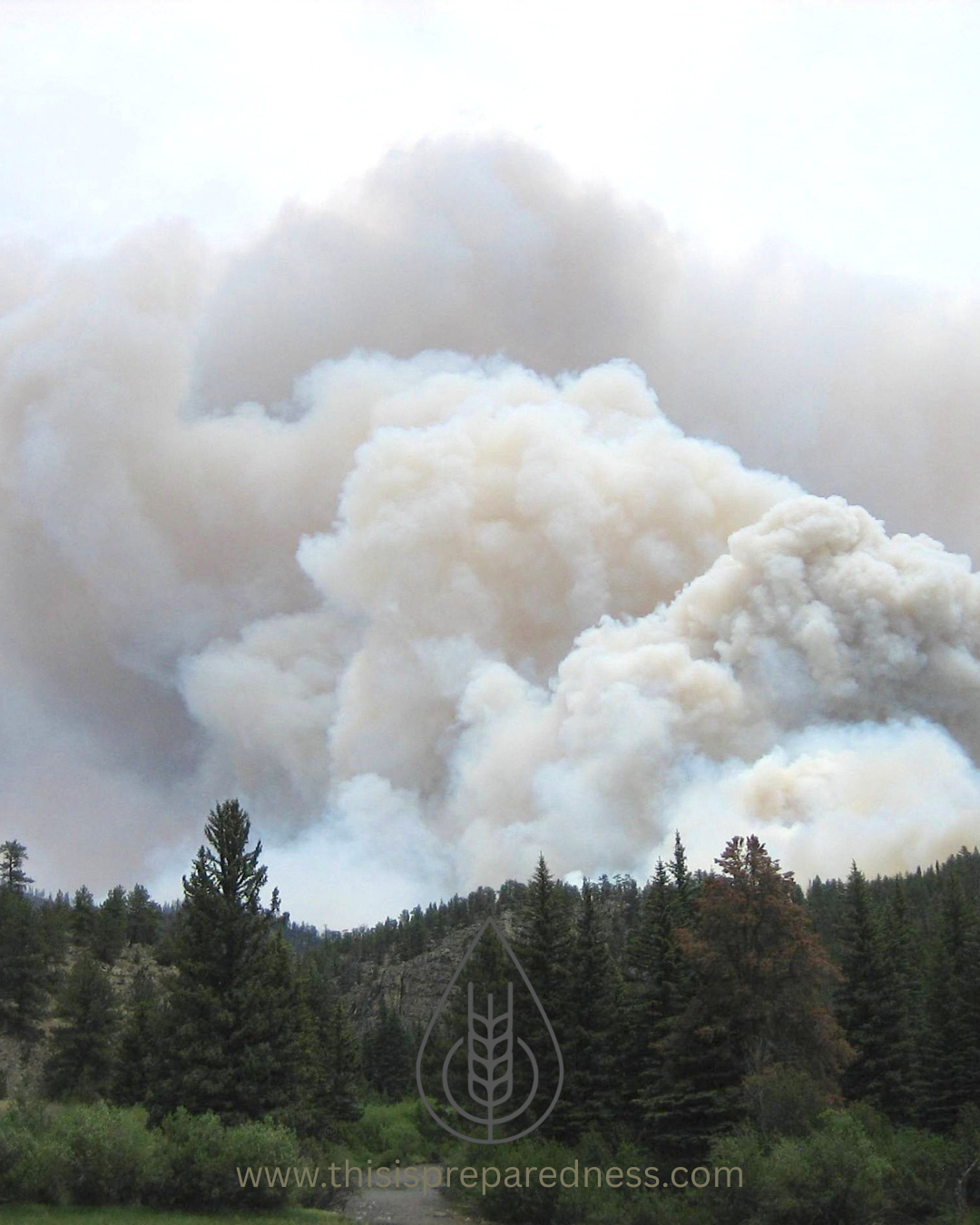
Wildfires aren’t just a “Western states” problem anymore—they’re becoming a growing threat in more areas each year, especially as drought conditions intensify. The good news? There is a lot within your control. The difference between loss and protection often comes down to the steps you take before a fire ever starts.
Why This Matters More Than Ever
Nearly 90% of the U.S. is facing extreme to critical drought conditions.
Whether it’s natural cycles or poor management of our resources, the impact is already unfolding—damage to homes and property, and the destruction of vital farmland and livestock. And it doesn’t stop there. As farmland burns, so does a portion of our food supply… leading to food scarcity and rising prices in the months ahead.
It’s easy to feel overwhelmed reading that.
But this is not the time to panic.
This is the time to prepare and protect.
The good news? There is a lot you can do right now to be a better steward of your home, your resources, and your family’s safety.
Wildfire Mitigation: Protect Your Home Before a Fire Starts
Create Defensible Space
One of the most effective ways to protect your home is by creating a buffer between it and surrounding vegetation.
Start here:
Clear dead leaves, pine needles, and debris within at least 30 feet of your home
Trim tree branches 6–10 feet from the ground
Space trees so their canopies don’t touch
Move firewood, propane tanks, and flammable materials at least 30 feet away
Harden Your Home
When embers travel (and they will), your home needs to be ready.
Focus on:
Cleaning gutters regularly—dry debris is fuel
Installing ember-resistant vents or mesh coverings
Using fire-resistant roofing or siding when possible
Sealing gaps around doors, windows, and rooflines
Maintain Your Yard
Your landscaping plays a major role in fire behavior.
Keep grass short and maintained
Remove dead or dying trees and shrubs
Avoid bark mulch near your home—opt for gravel or stone
Eliminate “ladder fuels” by pruning low branches
Be Smart with Fire Sources
Many wildfires start from preventable causes.
Avoid outdoor burning on dry or windy days
Keep grills and fire pits far from structures
Store fuels safely and away from heat
Wildfire Preparedness: Be Ready If a Fire Happens
Build a Go-Bag (Your 72hr kit-with some additional supplies)
If you need to leave quickly, preparation is everything.
Include:
3 days of food and water per person
Important documents in a waterproof bag
Medications and a basic first aid kit
Flashlights, batteries, and chargers
Extra clothing and sturdy shoes
N95 masks for smoke protection
Create an Evacuation Plan
In an emergency, clarity saves time—and time saves lives.
Know at least two ways out of your neighborhood
Choose a meeting place for your family
Practice leaving quickly
Plan for pets and livestock ahead of time
Stay Informed
Awareness gives you an advantage.
Sign up for local emergency alerts
Monitor weather conditions regularly
Watch for Red Flag Warnings
Prepare Your Vehicle
Keep your gas tank at least half full
Store an emergency kit in your car
Know evacuation routes beyond your immediate area
When a Wildfire Is Nearby
If a fire is approaching, don’t wait until the last minute.
Bring outdoor items inside (furniture, doormats, etc.)
Close all windows and doors, but leave them unlocked
Turn off gas if instructed
Be ready to evacuate early
Prepared, Not Panicked
This all may sound serious—because it is.
But preparedness isn’t about fear. It’s about taking control, reducing risk, and protecting what matters most.
You don’t have to do everything today. Start with one step. Then another.
And don’t keep this information to yourself!
SHARE it with your family, your friends, and your neighbors. The more prepared we are together, the stronger and safer our communities will be.